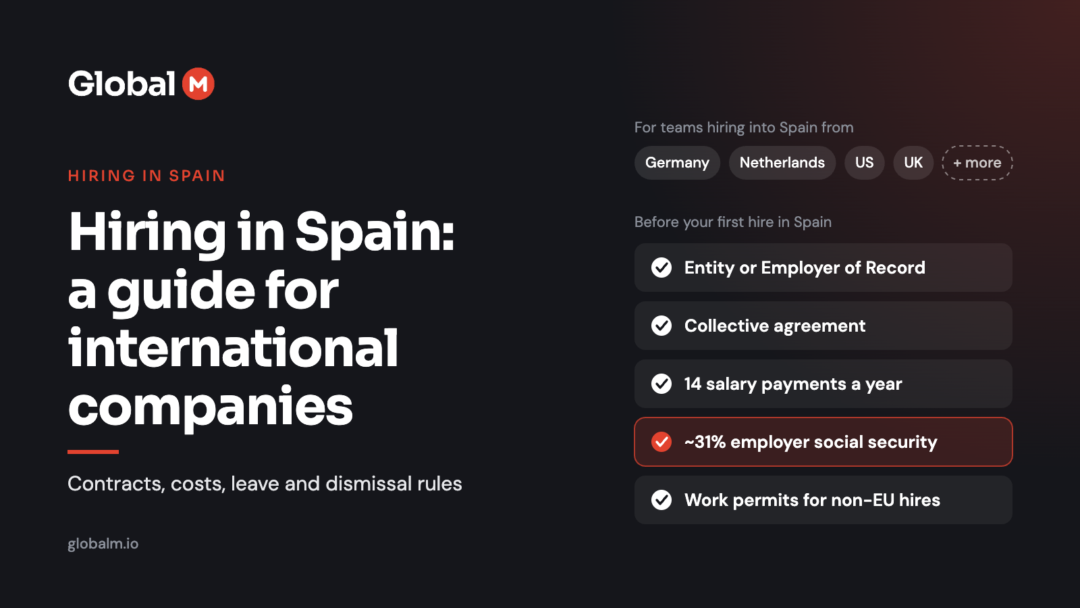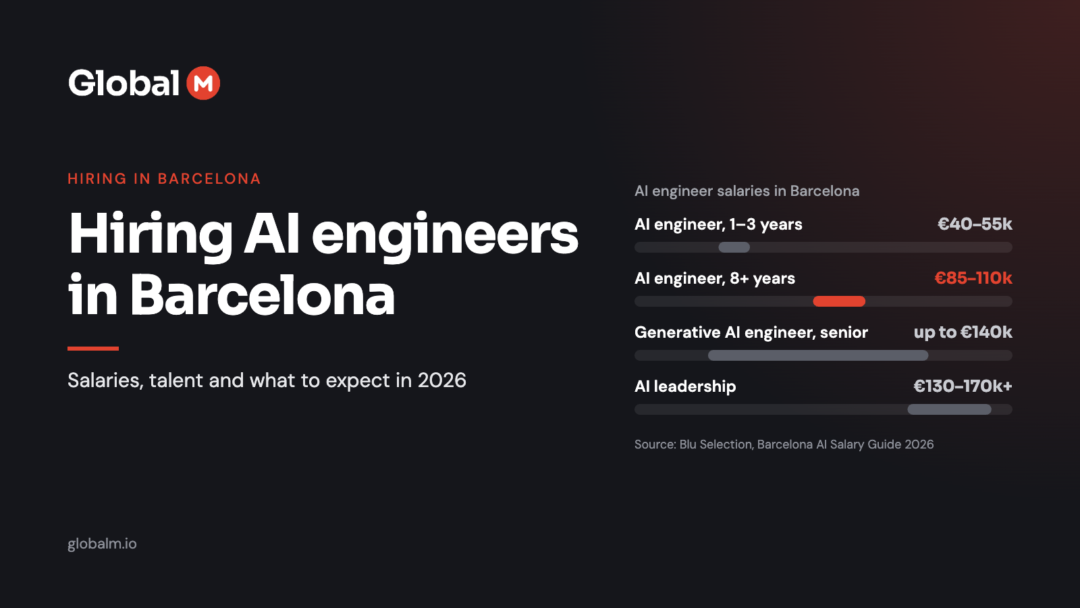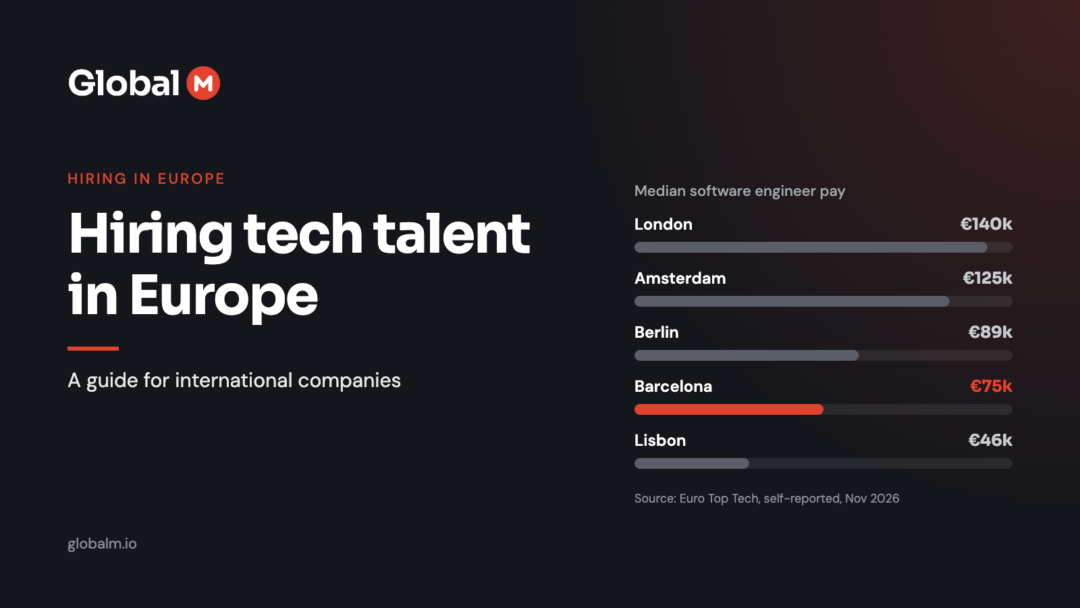
Where to hire tech talent in Europe in 2026: the size of the shortage, salaries by city, how to employ people across borders and why Spain stands out.
Losing good people part-way through hiring is expensive. Every withdrawal means more sourcing, more interviews and more time with a role left open. For specialist roles, where there may only be a handful of suitable candidates, losing one can set a search back by weeks.
This article looks at why candidates drop out, the seven most common causes we see, and practical ways to fix them.
More often than most employers think. In a Totaljobs survey of 2,025 UK jobseekers and 748 HR leaders, carried out in 2025, 28% of candidates said they had dropped out of a hiring process. The most common reasons were:
Silence is a big part of the problem. In Employment Hero research with 1,000 UK workers, carried out by OnePoll and published in January 2026, 80% said they had applied for a job and heard nothing back, 44% complained about long waits between interviews and 42% said they had been ghosted after an interview. 61% said the hiring process had put them off looking for a new role altogether.
Almost every one of these reasons is within the employer’s control.
The best candidates are rarely on the market for long, and they are often speaking to several companies at once. Every extra week between stages gives a competitor time to make an offer first.
Delays usually come from the same places: hiring managers who can’t find time to interview, feedback that takes days to collect, and approvals that only start once a preferred candidate has been chosen.
How to fix it: agree interview slots with hiring managers before the role goes live, set a target of giving feedback within 48 hours of each interview, and get salary and headcount approved before you start, not at offer stage.
In the same Totaljobs survey, 36% of recruiters said their company had too many interview stages. Each extra round adds time and asks more of the candidate, often without telling you anything new.
How to fix it: give every stage a clear purpose and assess each skill once. For most roles, two or three stages are enough. If several people need to meet the candidate, combine them into a panel or schedule the interviews on the same day.
A few days of silence after an interview can feel like a rejection to a candidate. Many will start prioritising other opportunities, even if you still plan to make them an offer.
How to fix it: tell candidates at the start what the stages are and when they will hear from you, then keep to it. If a decision is delayed, say so. A short update, even “we don’t have news yet, we expect to by Thursday”, keeps people engaged.
This was the most common reason for dropping out in the Totaljobs research. It happens when the job advert is vague, when different interviewers describe the role differently, or when the scope changes during the process.
How to fix it: agree the brief with the hiring manager before you advertise: what the person will do, who they will work with and what success looks like after six and twelve months. Make sure every interviewer describes the role the same way. Our guide to the recruitment process from kick-off to offer explains how to run a proper briefing.
Salary transparency was one of the top things candidates said would keep them engaged. When pay isn’t discussed until the offer, both sides can spend weeks on a process that was never going to work.
How to fix it: include a salary range in the advert where you can, and confirm expectations in the first conversation. Benchmark the range against the current market before you start, especially for technical roles where pay moves quickly.
Long application forms, retyping a CV into an applicant tracking system, or a large take-home task before anyone has spoken to the candidate all put people off. Experienced candidates who aren’t actively looking are the least likely to put up with it.
How to fix it: ask only for what you need to decide whether to speak to someone. Try applying for your own role on a phone. If it takes more than a few minutes, simplify it. Keep assessments short, relevant to the job and later in the process.
Interviews work in both directions. Candidates judge your company by how they are treated: whether interviewers have read their CV, whether they start on time, and whether anyone explains why the role matters. An interviewer who is unprepared or distracted can undo a lot of good work.
How to fix it: brief interviewers on the candidate and the role beforehand, give each interviewer a clear focus, and leave time for the candidate’s questions. Make sure someone explains what makes the opportunity worth taking.
Before changing everything, find out where people actually drop out. A few simple checks usually show the problem:
For more on the candidate side of hiring, see the top five mistakes in candidate experience.
Many companies lose candidates because the people running hiring simply don’t have the time to keep every process moving. With Global M’s Embedded Hiring Team, dedicated Talent Partners join your team to run hiring end to end: briefing, sourcing, scheduling, candidate updates and offers, with live dashboards showing progress on every role. For one-off or specialist roles, our Success-Based Hiring model means you only pay when you hire.
Book a free 20-minute call to talk about where your process could improve.
Further reading: How to scale your recruitment team without increasing headcount.
Active subscribers
Stay ahead of the curve in the ever-evolving world of recruitment. Our newsletter keeps you in the loop with the latest industry trends, providing valuable insights for both companies and job seekers.