
The Global M Blog
What Makes a Great First Engineering Hire? 5 Traits You Shouldn’t Overlook
The first engineering hire is one of the most important decisions a startup will make. This person doesn’t just write code — they help shape the product, set technical foundations, and influence how the engineering team will grow in the future.
At this stage, there’s little structure and a lot of uncertainty, so the right hire can accelerate progress, while the wrong one can slow everything down.
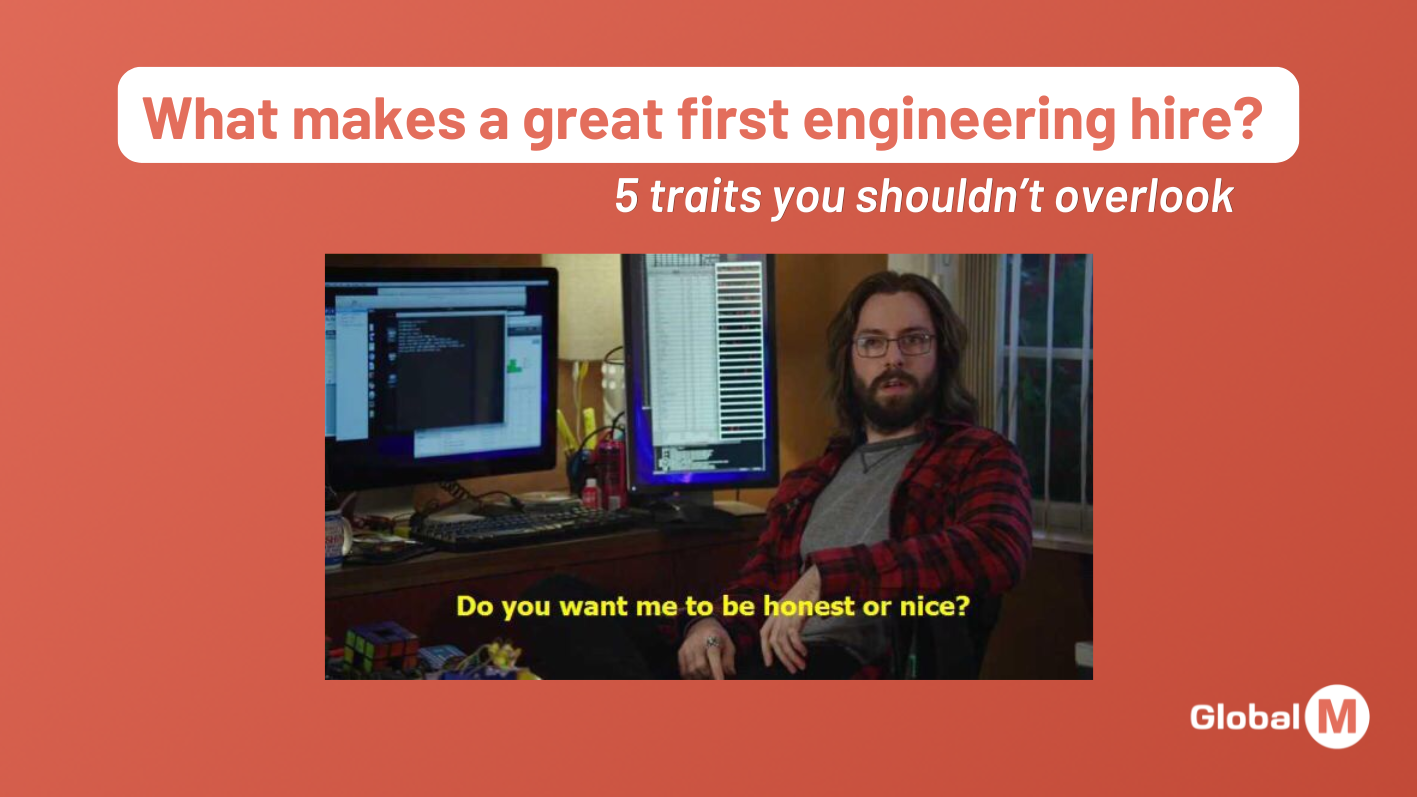
The role of the first engineer in a startup
Your first engineer will do far more than just build features for you. In the early stage of your startup, they are often the person who turns your idea into a real, working product and helps you make the key technical decisions that will shape your company long-term.
They’ll work closely with you as a founder to build the MVP, choose the right tools and architecture, and put in place the first version of your engineering processes. At this stage, you’ll likely need someone comfortable moving quickly, working across the full stack, and solving problems without much structure or guidance.
Just as importantly, your first engineer will set the standard for how your future engineering team operates, influencing both the technical direction and the culture you build as you scale.
Key traits of a great first engineering hire
- Startup mindset
Your first engineer should be comfortable working in uncertainty, where priorities can change quickly, and processes are still being defined. They need to be someone who can stay productive without needing structure. - Strong technical versatility
At this stage, you often need someone who can work across the stack. Whether it’s backend, frontend, infrastructure, or product integration, they should be able to adapt and make pragmatic technical decisions. - Ownership and accountability
You want someone who doesn’t wait to be told what to do. Your first engineer should take responsibility for outcomes, not just tasks, and be proactive in moving things forward. - Product thinking
The best early engineers don’t just write code — they understand what you’re building and why. They can think in terms of user problems and help shape the product, not just implement it. - Strong communication skills
They’ll be working closely with you and other non-technical stakeholders, so they need to be able to explain decisions clearly, challenge ideas when needed, and keep you aligned on technical trade-offs.
Common hiring mistakes startups make
Here are some of the most common mistakes startups make when hiring their first engineer:
- Hiring for “big company experience” over startup readiness
Founders often assume that engineers from large, well-known companies will automatically perform well in a startup environment. In reality, many struggle with the pace, ambiguity, and lack of structure that come with an early-stage company. - Hiring someone too junior
While budget is always a consideration, your first engineer needs to be able to operate independently. If they require too much direction or support, it can slow down product development instead of accelerating it. - Over-indexing on technical depth alone
Strong coding ability is important, but it’s not enough. Many startups make the mistake of hiring purely on technical strength and ignoring traits like ownership, communication, and product understanding. - Ignoring the founder–engineer fit
Your first engineer will work extremely closely with you. If there isn’t alignment on working style, expectations, and communication, small issues can quickly become major friction points. - Not testing for real-world problem solving
Over-focusing on theoretical interviews or algorithmic tests can miss how someone actually builds and ships products. At this stage, practical thinking and execution matter far more than abstract problem-solving.
Conclusion
Your first engineering hire will have a lasting impact on your startup — not just on your product, but on how your entire engineering team evolves.
At this stage, it’s not just about technical ability. The best early engineers combine strong execution with ownership, adaptability, and the ability to think alongside you as a founder.
Getting this hire right can significantly speed up your progress and help you build a strong technical foundation for the future.
20,000+
Active subscribers
Stay ahead of the curve in the ever-evolving world of technology recruitment. Our newsletter keeps you in the loop with the latest industry trends, providing valuable insights for both companies and job seekers.

Keep reading
More news, insights and tips

In this post, we take a look at the key trends, challenges, and industry shifts that have defined recruitment this year and what they mean for businesses and candidates alike.
In this article, we’ll explore the five must-have traits of top-performing Account Executives.
No results found.