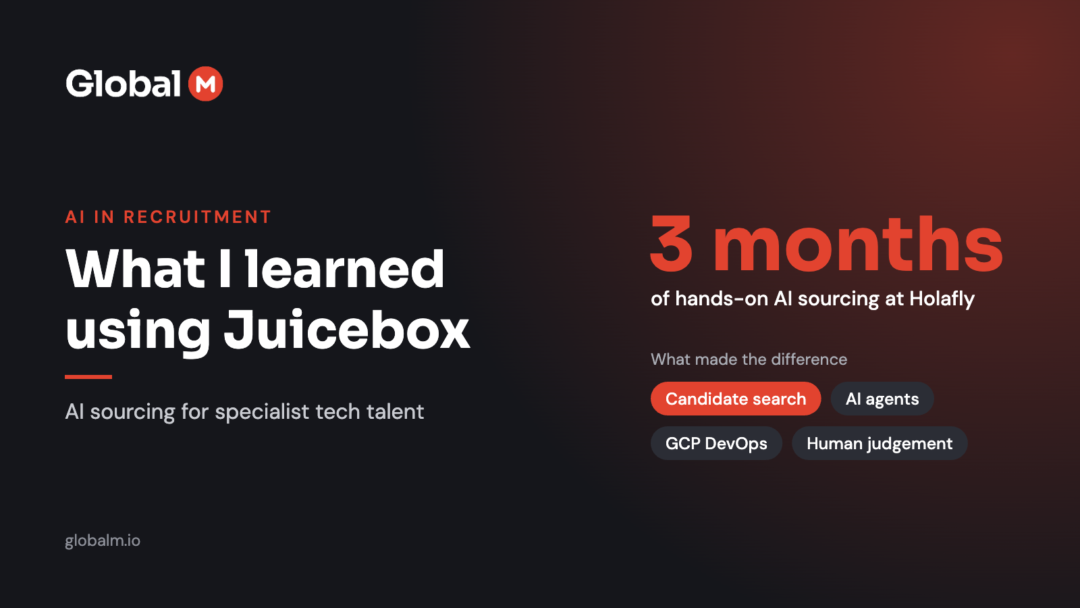
A first-hand Juicebox review: AI sourcing for senior DevOps and engineering roles at Holafly, the results, the limits and why recruiter judgement still matters.
Key facts (November 2026)
Process mining is a data technique that reads the event logs inside systems such as SAP, Oracle and Salesforce and rebuilds how work actually flows: every order, invoice and approval, with every delay and rework loop. Process intelligence is process mining plus business context and, increasingly, AI agents that act on what the data shows.
The market is growing fast. MarketsandMarkets valued process mining at USD 1.8 billion in 2023 and expects USD 12.1 billion by 2028, a compound annual growth rate of 45.6%. Celonis, the category leader, was named a Leader in the Gartner Magic Quadrant for Process Mining Platforms for the third year running in April 2025.
The results are large enough to get board attention. At Celosphere in November 2025, Celonis said 120 customers had each realised more than USD 10 million in value, USD 8.1 billion in total. Siemens, one of the best-known users, connects data from more than 60 ERP systems and reports savings in the tens of millions of euros (Computer Weekly).
That is why companies now treat process intelligence as a permanent capability rather than a project, and why they need people to run it.
Global M, an international talent consultancy headquartered in Barcelona with offices in London, Madrid, New York and Johannesburg, has worked with Celonis for several years and has made 300 hires across 200 roles for the company, including value and implementation engineers, software engineers, product managers, account executives and business analysts, in Europe, LATAM, APAC and the US (read the Celonis case study). Value engineers, the people who turn process data into a business case for customers, are the role we hire most often. We also hire for specialist Celonis partner consultancies building their own process intelligence teams.
To see how far demand now reaches beyond the vendor, we tracked public job ads asking for Celonis or process mining skills in Europe between 28 October and 18 November 2026. In three weeks we found 39 roles:
Two things stand out. Companies are no longer only buying Celonis through consultancies: they are hiring their own process mining engineers, architects and product owners. And Spain, especially Madrid and Barcelona, has become one of Europe’s busiest markets for this talent.
The table covers the profiles employers across the market ask for, from Celonis partners and consultancies to in-house teams. It is not a list of the roles we have filled for Celonis.
| Role | What they do | Skills employers ask for |
|---|---|---|
| Process mining / process intelligence consultant | Runs projects from discovery workshops to implementation and value tracking | Celonis or a similar tool, SQL, order-to-cash or procure-to-pay knowledge, client communication |
| Celonis data engineer | Connects ERP and other source systems, builds the data model and keeps it running | SQL, Celonis data integration and PQL, SAP or Oracle tables, Python |
| Process automation engineer | Turns findings into automated actions and workflows | Celonis Action Flows or similar, UiPath or other automation tools, APIs |
| Value engineer | Builds the business case, runs proofs of value and tracks the value customers realise | Consulting or business transformation background, financial modelling, executive presence |
| Solution architect / process intelligence architect | Designs how process intelligence fits into the company’s systems and data platform | Enterprise architecture, cloud data platforms, security, integration |
| Product owner / platform owner | Owns the internal Celonis platform, roadmap and adoption across business units | Product management, stakeholder management, process excellence |
The common thread is a mix that is hard to find: enough technical depth to work with raw system data, and enough business understanding to know what a delayed invoice or a manual order change costs.
Process mining was born in academia, and a small group of universities still produces much of the field’s talent. More than 500 institutions take part in Celonis’s academic community each year, and Celonis picks a handful as Academic Centers of Excellence for the strength of their teaching and research.
Germany has one of the deepest concentrations of process mining research and teaching anywhere, which is one reason Celonis grew up in Munich.
| University | Why it matters |
|---|---|
| RWTH Aachen University | Home of Prof. Wil van der Aalst, often called the godfather of process mining, who chairs Process and Data Science there and is Celonis’s Chief Scientist. Works closely with Fraunhofer FIT. 2025–26 Celonis Center of Excellence. |
| Technical University of Munich (TUM) | Celonis started in 2011 as a TUM spin-off founded by three students, and Munich remains the centre of the Celonis ecosystem. |
| Humboldt-Universität zu Berlin | Prof. Jan Mendling has been Einstein Professor for Process Science there since 2021. His textbook Fundamentals of Business Process Management is taught in more than 70 countries. |
| University of Bayreuth | Leads research on process mining from sensor and Internet of Things data, in a German Research Foundation (DFG) research unit with Kiel and Humboldt University. |
| University of Münster | Strong information systems and business process management research. 2025–26 Celonis Center of Excellence. |
| Pforzheim University | Teaches process mining across engineering, business and law, and design. Celonis Center of Excellence for the third time. |
Spain’s universities are building a strong base in business process research, and its hiring market is now one of Europe’s busiest.
| University | Why it matters |
|---|---|
| Universitat Politècnica de Catalunya (UPC) | Its Process and Data Science group in Barcelona does fundamental research in process discovery, conformance checking and process enhancement. |
| University of Seville | Its researchers chaired BPM 2025, the leading international business process management conference, held in Seville in September 2025. |
| Universidad Internacional de La Rioja (UNIR) | Online master’s programmes in business process management, where Celonis certifications can form part of the course. |
| University | Country | Why it matters |
|---|---|---|
| Eindhoven University of Technology (TU/e) | Netherlands | Where van der Aalst built the field over more than 25 years before moving to Aachen in 2018. |
| NOVA IMS | Portugal | Process mining is part of its business process management courses. 2025–26 Center of Excellence. |
| University College Dublin | Ireland | 2025–26 Celonis Center of Excellence. |
| University of Westminster | UK | 2025–26 Celonis Center of Excellence. |
| Central Michigan University, William & Mary, Rutgers | US | All 2025–26 Centers of Excellence. Central Michigan has held the status four years in a row. |
For hiring, these universities matter in two ways. Their graduates arrive with real process mining experience, often including Celonis certifications and projects with companies. And their research groups are where many senior specialists and future product leaders come from.
The companies that compete hardest for this talent fall into three groups.
Software vendors. Celonis leads the market, headquartered in Munich and New York, with more than 3,000 employees. Other platforms include SAP Signavio, UiPath, ARIS, IBM and Appian, plus newer players such as Apromore, mpmX and Skan AI. Vendors hire across product, engineering, value engineering and sales.
Consultancies and partners. The Big Four, Capgemini Invent, Accenture and a growing group of specialist Celonis partners, many of them in Germany, the Netherlands and Spain, deliver most implementations. They hire consultants and data engineers in volume, and specialists often move between them and the vendors.
Advanced end users. The most mature users run process intelligence as a permanent internal platform. Siemens is the best-known example, with data from more than 60 ERP systems. Mercedes-Benz, Uniper and Vinmar were among the customers Celonis highlighted at Celosphere 2025. In our job tracking, insurers, banks, manufacturers, energy and mobility companies were all hiring their own Celonis architects, engineers and platform owners.
The pattern is consistent: once a company sees value from process mining, it builds an internal team, and competes with vendors and consultancies for the same small pool of people.
Process mining rebuilds how a process actually runs from system event logs. Process intelligence combines that with business context, such as targets, costs and customer data, and increasingly with AI that recommends or takes action.
Hands-on Celonis experience, strong SQL, knowledge of a core process such as order-to-cash or procure-to-pay, an understanding of ERP data (often SAP), and the communication skills to turn findings into a business case.
Germany has the deepest pool, especially Munich, Aachen and Berlin. Spain (Madrid and Barcelona), Poland, the Netherlands and Portugal are fast-growing markets, and universities such as RWTH Aachen, TUM and UPC Barcelona train many specialists.
The 2025–26 list has 13 institutions, including RWTH Aachen, the University of Münster, Pforzheim University, NOVA IMS, University College Dublin, the University of Westminster, Central Michigan University, William & Mary and Rutgers.
It depends on seniority, but experienced Celonis specialists are approached by vendors, consultancies and end users at the same time. A clear brief, a competitive offer and a process of two or three stages give you the best chance of hiring them.
Yes. Global M has made 300 hires across 200 roles for Celonis and hires for Celonis partners and in-house process intelligence teams, through an Embedded Hiring Team or Success-Based Hiring.
Global M has hired for Celonis for several years and knows the process intelligence market from the inside: who the specialists are, where they trained and what it takes to move them. With an Embedded Hiring Team, dedicated Talent Partners join your team to build your Celonis or process mining function. For a single key hire, such as a lead architect or your first process mining engineer, Success-Based Hiring means you only pay when you hire.
Book a free 20-minute call to talk about your process intelligence hiring.
Further reading: The most in-demand AI roles in 2027 and Hiring tech talent in Europe.
Recruitment insights on LinkedIn
Stay ahead of the curve in the ever-evolving world of recruitment. Our newsletter keeps you in the loop with the latest industry trends, providing valuable insights for both companies and job seekers.